

Daily London
At least one death was reported in Jamaica, where Melissa roared ashore on Tuesday with top sustained winds of 295km/h.
A tree fell on a baby in the island nation’s west, Abka Fitz-Henley, a state minister, told Nationwide News Network, a local radio station, adding that most destruction was concentrated in the south-west and north-west.
Melissa had top sustained winds of 165km/h and was moving north-north-east at 22km/h on Wednesday morning (early Thursday AEDT), according to the hurricane centre.
The hurricane was centred 72 kilometres north-west of Guantánamo, Cuba, and 330 kilometres south of the central Bahamas.
Hundreds of thousands of people in Cuba had been evacuated to shelters on Wednesday. A hurricane warning was in effect for Granma, Santiago de Cuba, Guantánamo, Holguin and Las Tunas provinces as well as the southeastern and central Bahamas.
In the city of Las Tunas, 73-year-old retiree Manuel Pérez told The Associated Press by phone it was impossible to quantify the damage just yet because the hurricane hit at night. No one was on the streets.
“The winds and gusts were very strong, and the rain is still coming,” he said.
The agency warned that preparations for the storm in the Bahamas “should be rushed to fulfilment”.
Melissa struck Jamaica on Tuesday with top sustained winds of 295km/h before weakening over land.
It was forecast to continue weakening as it crossed Cuba and remain a strong hurricane as it moves across the southeastern or central Bahamas later on Wednesday (early Thursday AEDT).
The storm is expected to make its way late on Thursday (Friday AEDT) near or to the west of Bermuda, where a hurricane watch is in effect.
The storm was expected to generate a storm surge of up to 3.6 metres in the region and drop up to 51 centimetres of rain in parts of eastern Cuba.
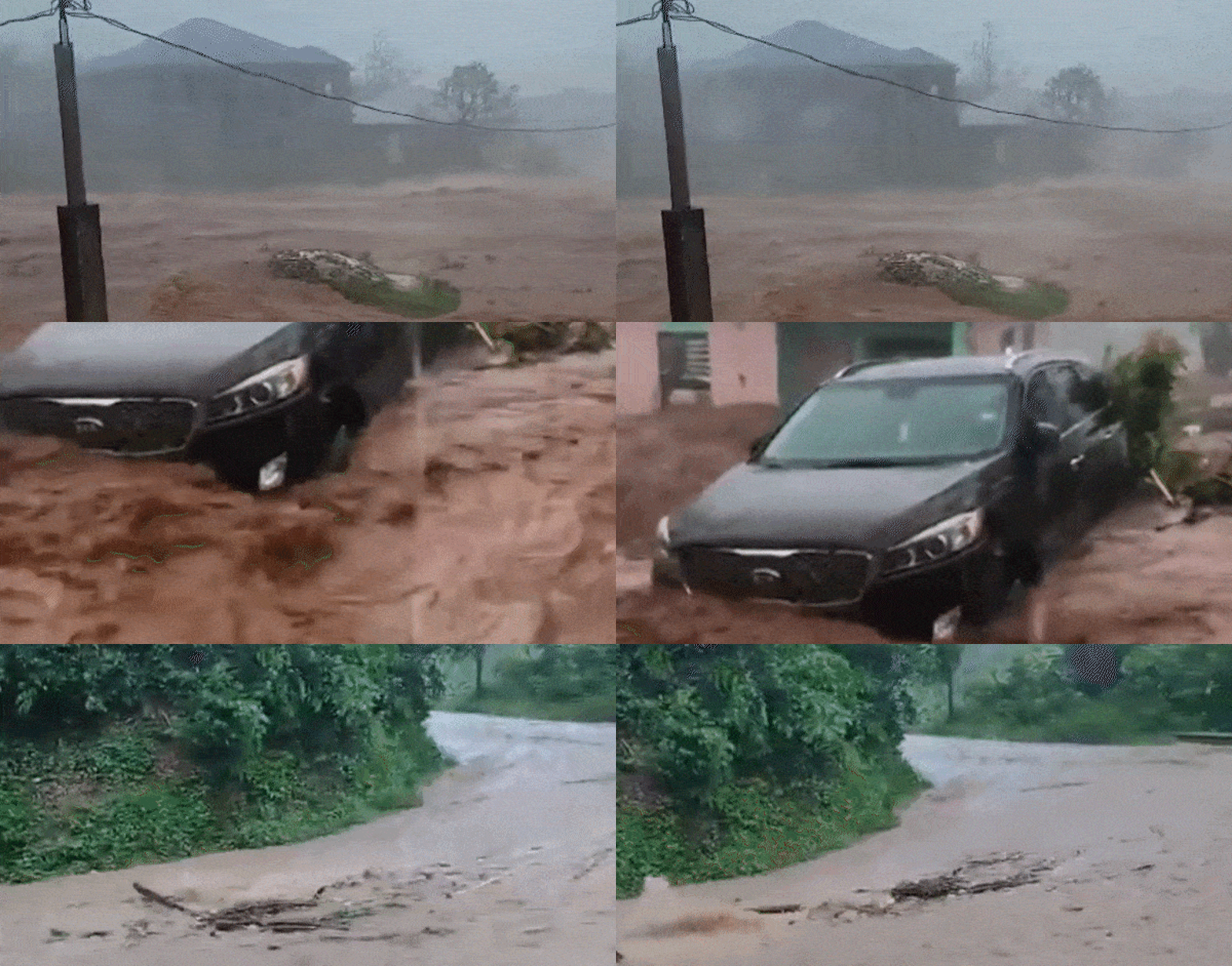
The intense rain could cause life-threatening flooding with numerous landslides, US forecasters said.
The hurricane could worsen Cuba’s severe economic crisis, which already has led to prolonged power blackouts, as well as fuel and food shortages.
“There will be a lot of work to do. We know there will be a lot of damage,” Cuban President Miguel Díaz-Canel said in a televised address, adding that “no one is left behind and no resources are spared to protect the lives of the population.”
He urged the population not to underestimate the power of Melissa, “the strongest ever to hit national territory”.
Jamaica rushes to assess the damage
Jamaican officials reported complications in assessing the damage, while the National Hurricane Centre said the local government had lifted the tropical storm warning there.
“There’s a total communication blackout on that side,” Richard Thompson, acting director general of Jamaica’s Office of Disaster Preparedness and Emergency Management, told the Nationwide News Network.
More than half a million customers were without power late Tuesday as officials reported that most of the island had downed trees, power lines and extensive flooding.
Extensive damage was reported in parts of Clarendon in the south and in the south-western parish of St Elizabeth, which was “under water”, said Desmond McKenzie, deputy chairman of Jamaica’s Disaster Risk Management Council.
The storm damaged four hospitals and left one without power, forcing officials to evacuate 75 patients.
The government said it hopes to reopen all of Jamaica’s airports as early as Thursday to ensure quick distribution of emergency relief supplies.
The storm already was blamed for seven deaths in the Caribbean, including three in Jamaica, three in Haiti and one in the Dominican Republic, where another person remains missing.