

By using this site, you agree to the Privacy Policy and Terms of Use.
Accept
Daily LondonDaily London
Font ResizerAa
  • UK & Europe News
  • World Affairs
  • Tech & Innovation
  • Culture & Society
  • Voices of London
Reading: Chernobyl protective shield can no longer confine radiation after drone strike, UN nuclear watchdog says
Share
Font ResizerAa
Daily LondonDaily London
  • UK & Europe News
  • World Affairs
  • Tech & Innovation
  • Culture & Society
  • Voices of London
Search
  • UK & Europe News
  • World Affairs
  • Tech & Innovation
  • Culture & Society
  • Voices of London
Follow US
© 2025 Daily london. All Rights Reserved.
Daily London > World Affairs > Chernobyl protective shield can no longer confine radiation after drone strike, UN nuclear watchdog says
World Affairs

Chernobyl protective shield can no longer confine radiation after drone strike, UN nuclear watchdog says

Daily London
By Daily London
Published: December 7, 2025
Share

Daily London

The protective shield built around the Chernobyl nuclear disaster site in Ukraine can no longer do its job to confine radioactive waste as a result of a drone strike earlier this year, according to the International Atomic Energy Agency (IAEA).

The New Safe Confinement (NSC) at Chernobyl, which was “severely damaged” by the drone strike in February, has “lost its primary safety functions, including the confinement capability,” the IAEA said in a statement.

Ukraine accused Russia of carrying out the February 14 strike at Chernobyl, which the Kremlin denied.

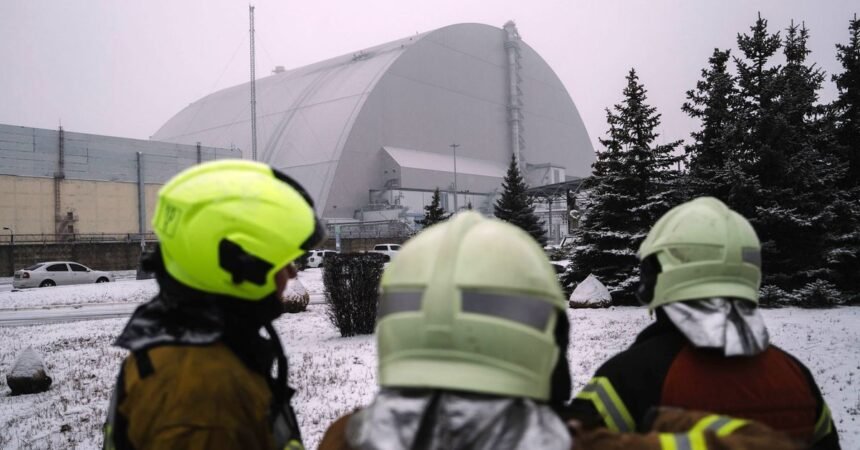
Emergency personnel watch as people inspect the damage to the radiation containment shield of Reactor Number 4 at the Chernobyl site following a February 14 drone strike. (Andrew Kravchenko/Bloomberg/Getty Images via CNN)

The strike hit the NSC, sparking a fire and damaging the protective cladding around it, the IAEA said.

The nuclear watchdog has recommended a major renovation of the huge steel structure, which was put into place several years ago to enable clean-up operations and ensure the site’s safety nearly four decades on from the worst nuclear power plant accident in history.

“Limited temporary repairs have been carried out on the roof, but timely and comprehensive restoration remains essential to prevent further degradation and ensure long-term nuclear safety,” IAEA Director General Rafael Mariano Grossi said.

Fragments of a drone that struck the New Safe Confinement in the Chernobyl Exclusion Zone following the February 14 attack. (Artem Derkachov/Frontliner/Getty Images via CNN)

Grossi added that there had been no permanent damage to the NSC’s load-bearing structures or monitoring systems.

The IAEA, which has a permanent presence at the site, will “continue to do everything it can to support efforts to fully restore nuclear safety and security,” Grossi said.

It’s not the first time that Chernobyl has been in the spotlight over the course of Russia’s near four-year war in Ukraine.

In this photo provided by the Ukrainian Emergency Service, damage from the drone strike is seen. (AP)

Russian forces seized the nuclear plant and its surrounding area in the early days of Moscow’s full-scale invasion, overrunning the plant in February 2022 and holding staff hostage. They left the plant and handed back control to Ukrainian personnel just over a month later.

The NSC is a massive, arch-shaped steel structure built at the Chernobyl site to cover the ruined Number 4 reactor and contain its radioactive material.

As the world’s largest movable land structure, the colossal hangar is a monumental feat of engineering. Built in 2010 and completed in 2019, it was designed to last 100 years and has played a crucial role in securing the site.

The huge container has been hailed as a marvel of engineering. (AP)

The project cost €2.1 billion ($3.68 billion) and was funded by contributions from more than 45 donor countries and organisations through the Chernobyl Shelter Fund, according to the European Bank for Reconstruction and Development, which in 2019 hailed the venture as “the largest international collaboration ever in the field of nuclear safety.”

In April 26, 1986 an explosion tore through the Number 4 reactor at Chernobyl, in what was then the Soviet Union, spreading radioactivity across swathes of Ukraine, Belarus, Russia and beyond.


More than 30 people were killed in the nearby city of Pripyat, Ukraine, with many others suffering symptoms resulting from radiation exposure since, according to the IAEA and the World Health Organisation. Birth defects and cancer rates among residents in the area exposed to radiation are still high.

You Might Also Like

South Korea’s move to ditch coal rings alarm bells for Australian exporters
Mum claims she used recalled Ultra Violette Lean Screen for two years before skin cancer diagnosis
Melbourne driver may have permanent vision loss after unprovoked car wash attack
TPG says possible second death linked to Triple Zero outages
Police hunt two teens after stolen ute drives at Jewish boys hurling abuse
Share This Article
Facebook Twitter Whatsapp Whatsapp Email Print
Previous Article Israeli Prime Minister Benjamin Netanyahu says Gaza ceasefire to move to ‘second phase’
Next Article Firefighter killed in Nerong bushfire zone

Stay Connected

16k Like
85k Follow
45.6k Subscribe
Telegram Follow
- Advertisement -

Latest News

Interstate crews brought in to help firefighters battle massive blaze
World Affairs
International Olympic Committee grills organisers at Milan meeting
World Affairs
Search for vulnerable woman who disappeared from bus stop nearly two months ago
World Affairs
Man arrested after allegedly mimicking shooting near footbridge
World Affairs

Daily London – The Global Pulse from the UK

Sign Up for Our Newsletter

Subscribe to our newsletter to get our newest articles instantly!

[email-subscribers-form id=”1″]

Daily LondonDaily London
© 2025 Daily London. All Rights Reserved.