Daily London
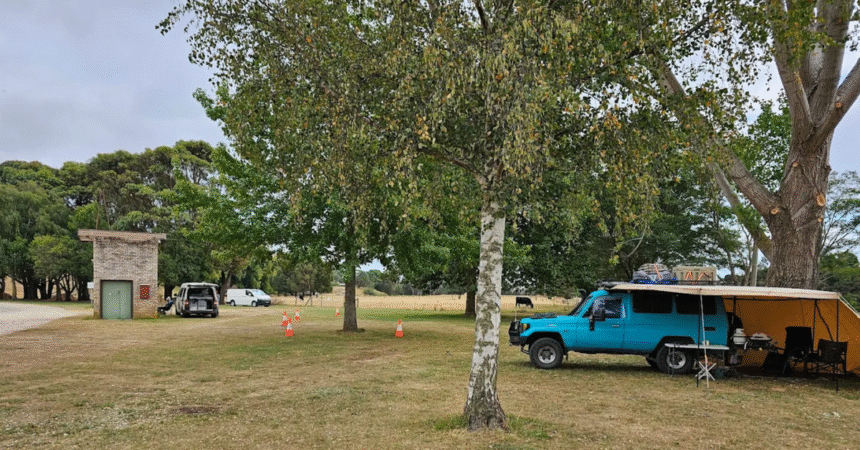
The impacted sites are Forth Recreation Ground, Midway Point in Sulphur Creek and Bannons Park in Gunns Plains in the state’s north-west.
A new permit system will also be enforced, including a maximum stay of three nights per site for self-contained vehicles such as campervans or RVs and a ban on fires and tents.
“The permit system is being introduced to help council better manage camping and RV visitation across the Central Coast,” the council’s Director of Corporate Services Samantha Searle told nine.com.au.
“The modest fee will be reinvested directly into maintaining and improving facilities, protecting the natural environment, and ensuring fair and equitable access to camping areas.
“It also aligns with council’s adopted RV and Camping Strategy and broader planning to enhance visitor experience, support tourism growth and deliver future infrastructure upgrades that will benefit both visitors and the local community.”
It follows a proposal by the NSW national parks service to standardise camping fees across the board following a rise in “ghost camping”.
A consultation paper released last year, of which the submissions are yet to be released, outlined a “significant” change to the NSW Parks and Wildlife Service (NPWS), the first since 2017.
The tiered system would see fees increased, particularly during the busy season.
For most campers, fees would increase in high season and be cheaper in low season, the NPWS said.
“For example, a family of four currently pays $68/night in a beachfront campground (tier 6), but with the proposed tiered system they would pay $89/night in high season or $54/night in low season,” the consultation paper stated.
The fees would be introduced to encourage cancellations and discourage ghost camping or no-shows, where travellers book but don’t ever arrive to claim their spot.
The NPWS said it had considered alternative approaches, including a “first-come, first-served” model, 100 per cent refunds for cancellations or fines for no-shows, but found it “difficult” to enforce.
Around 23,000 people responded to the submission.
The NPWS is now in the process of reviewing the feedback.
Ghost camping is a nationwide issue that has prompted government responses in multiple states.
The move wiped out $7.3 million in annual booking fees for campers but it’s come at another high cost – campsites sitting empty.