


Daily London
The ban, which came into effect on December 10, is the first of its kind globally.
“We are leading the world,” Wells told Today.
“Many people said this could not be done.”
But data has now shown that 4.7 million accounts on age-restricted platforms were shut down in the ban’s first week alone.
“This is an incredible Australian story for us to show the world what is possible, to give kids back their childhood,” Wells said.
Prime Minister Anthony Albanese echoed that sentiment at a press conference today.
“We spent one year making sure that we got the details right,” he said of the ban, which he announced was working as intended.
“Young people, instead of being on their devices this school holidays, have been cycling … have been reading books, have been engaging with their friends and family.”
Albanese said the ban has given parents peace of mind and protected young Australians from the potentially harmful impacts of social media in recent weeks.
“In spite of some scepticism out there it’s working and is being replicated now around the world,” he said.
eSafety Commissioner Julie Inman Grant said the government is keeping a close eye on young Australians migrating to new platforms as age-restricted platforms like Instagram, Facebook, TikTok and Snapchat continue to remove accounts.
“We’re preventing predatory social media companies from accessing our children,” she said.
She also mentioned plans for world-leading AI chatbot restrictions to be implemented this year.
At the same press conference, Wells acknowledged that Australia’s social media ban is not yet perfect and said work is being done to improve legislation.
Age-restricted social media platforms are expected to continue to remove accounts belonging to under-16s as they’re found or created.
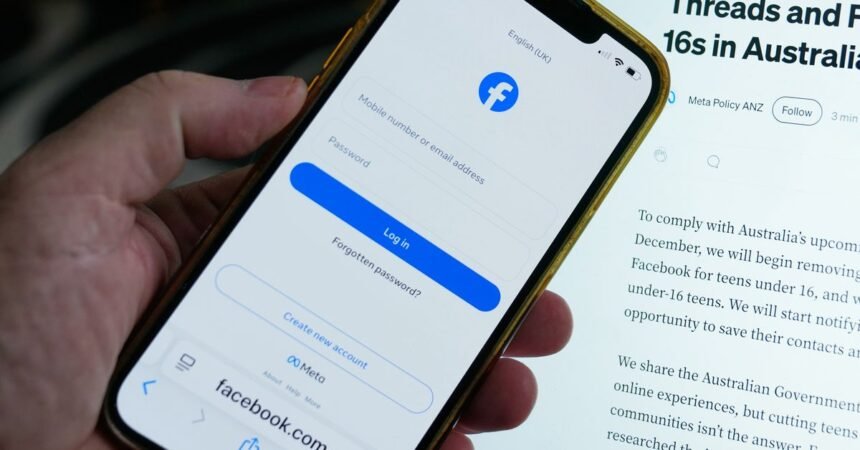
Despite wiping more than half a million accounts, Meta has made clear its concerns with the ban.
“The premise of the law, which prevents under-16-year-olds from holding a social media account so they aren’t exposed to an ‘algorithmic experience,’ is false,” Meta senior account executive Kathleen Walsh said.
“Platforms that allow teens to still use them in a logged-out state still use algorithms to determine content the user may be interested in – albeit in a less personalised way that can be appropriately tailored to a person’s age.”
She said the ban may also isolate teens from supportive online communities.
“There’s a lot of loopholes,” Alicia Liu, 13, said on the day the ban came into effect.
At the time she’d only been barred from one platform, Snapchat, and had already found a workaround.
Four of her friends, all aged 14, had not had any of their social media accounts removed.
”Right now I think a lot of teens, the way they help or keep their mental health stable is on social media, talking to their friends or watching creators that help,” Rose Pickles, 14, said at the time.
“The social media ban feels like a punishment for something we didn’t create.”