


Daily London
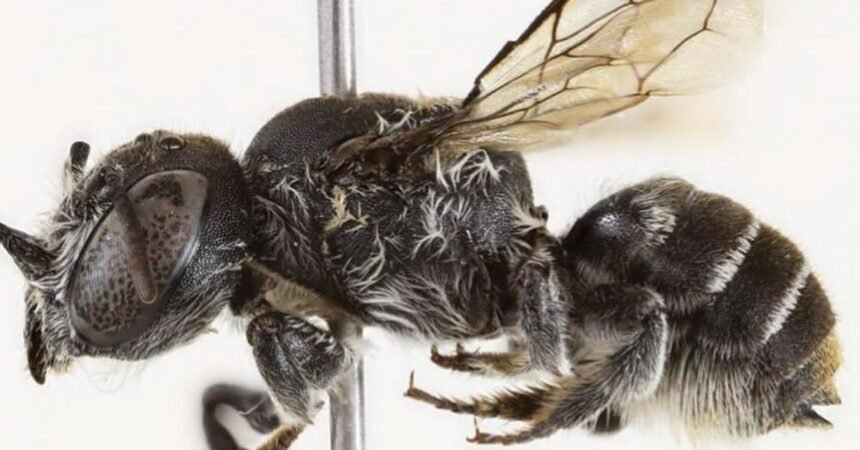
Native bee scientist and Curtin Adjunct Research Fellow Kit Prendergast was surveying pollinators of the Marianthus aquilonaris wildflower in Bremer Range in the remote WA Goldfields when she stumbled upon an unfamiliar type of bee.
Prendergast named the female bee Megachile (Hackeriapis) lucifer, a nod to her favourite Netflix show, because of the winged insect’s distinctive horns.
Lucifer is a British drama series starring Welsh actor Tom Ellis as the title character.
“I discovered the species while surveying a rare plant in the Goldfields and noticed this bee visiting both the endangered wildflower and a nearby mallee tree,” Prendergast said.
The Australian native lucifer bee has never been spotted before – and DNA barcoding confirmed it does not match any previously discovered species.
Its presence during a mass flowering of an endangered host suggests this bee may be of “conservation concern”, according to a journal article published by Prendergast and Joshua W. Campbell.
“This species visits a critically endangered plant, Marianthus aquilonaris, in a region that targeted for mining (around Lake Johnston of the Goldfields),” Prendergast said in a post on Instagram.
“For many threatened plants, we do not even know what visits them.
“For many mining and development projects, there is no requirement to even survey, let alone mitigate or offset potential impacts on the native bee and invertebrate communities.
“Not only does the name lucifer refer to Lucifer, but it is also Latin for ‘Lightbringer’, and I hope this new species shines light on the need to better invest in, monitor, and research Australian native bees and their conservation.”
The Megachile (Hackeriapis) lucifer bee is the first of its genus to be discovered in 20 years.
Australia is home to an estimated 2000 native bee species.