

Daily London
“So for it to be that intense and that widespread is a sign that the sun is still in the maximum of its solar cycle, where we see higher frequency of these more intense events.”
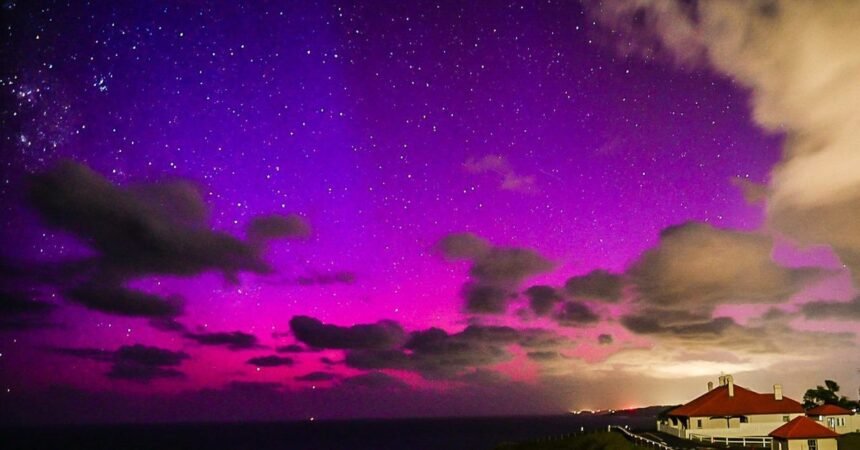
At a lighthouse in the northern NSW town of Byron Bay, Sarah Archibald captured the most vivid aurora australis she has ever seen about 9pm.
”I was super excited as it’s such a rare sight in the Byron Shire and this far north,” she said.
Further south in Dubbo, Peter Starr waited hours for the clouds to clear before he could witness the event from his observatory about 11.45pm.
“It was good to see that and see those perfectly blue streamers. I have only seen them once before this way, so that was good,” he said.
Starr said the aurora’s visibility was quite rare for his town, but he has seen six in the past 18 months.
Davies said this was due to the sun’s extended active phase, which typically occurs every 11 years.
“That is something we’re very much still trying to understand,” she said.
“Early in 2025, late 2024 was meant to be the reported peak maximum. So the fact that we’re even into early 2026 and still seeing really quite a lot of activity would say that it’s more of an extended period.”
During this active solar period, geomagnetic storms are more common.
Geomagnetic storms are caused by a solar flare that releases energy and charged particles that collide with the Earth’s atmosphere and interact with the magnetic field.
That interaction can create the captivating display we know as aurora australis.
While the intensity of the storm is now over, solar flare activity is continuing and a lower-level storm has been observed today.
“We anticipate a steady stream of activity probably over the next night or so, but then again, we could see another more energetic eruption, dragging it out even further,” Davies said.
“To see this kind of extended activity is also quite rare, because it wasn’t just a single large burst, but we’re seeing multiple bursts.”
The Bureau of Meteorology said weaker lights could be viewed in southern parts of the country tonight.
“It is likely to be weaker than last night, meaning it won’t be visible as far north as yesterday, but people in Victoria, Tasmania and southern Western Australia may still have a chance to capture the lights on the southern horizon,” the bureau said.