

Daily London
Just when you thought the idea of a snake bite couldn’t get scarier, Australian scientists have captured the deadly precision of vipers, cobras and other snakes in slow motion.
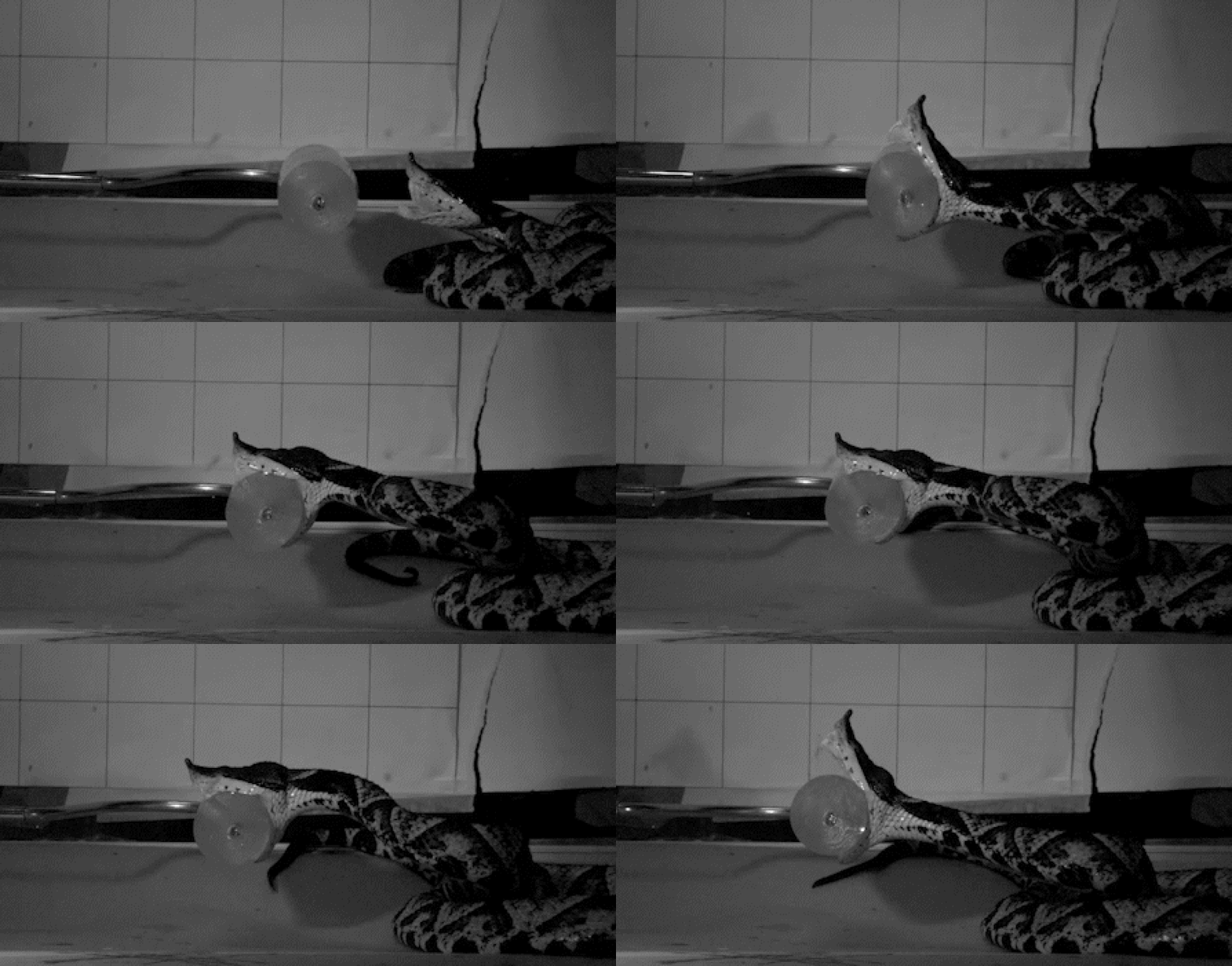
The snakes were filmed on high-speed cameras to reveal how these intimidating animals attack in unprecedented detail.
The resulting videos and photos are striking, to say the least.
“Venomous snakes have perfected the art of speed, accuracy and control,” lead author Dr Silke Cleuren said.
“Some vipers can reach their prey in less than one-tenth of a second, faster than the human eye can blink.
“But what’s really remarkable is how differently each group achieves the same deadly goal.”
He worked with other researchers to develop a clever way to trick some of the world’s most dangerous snakes into biting a fairly unappealing target – a gel cylinder.
They heated the muscle-like gel so that it would mimic an animal’s flesh and then coaxed the snakes into attacking.
Then they filmed at 1000 frames per second as species like the western diamondback rattlesnake, West African carpet viper and rough-scaled death adder did what they do best.
Cleuren admitted that “annoying a venomous snake with a piece of gel on a stick” was a huge adrenaline rush and he deinitely “flinched a few times”.
But the footage they captured was worth the scare.
It showed “behaviour that’s impossible to see with the naked eye” and offer new insight into how individual snake families have evolved strikes that perfectly suit how – and what – they hunt.
Vipers strike within 100 milliseconds but don’t deploy their venom right away, instead ‘walking’ their fangs into prime position before letting loose.
Members of the elapid family, like Australia’s king brown snake, creep in slowly then strike fast and bite repeatedly to pump their prey full of venom.
And colubrids like the green tree snake strike, then sweep their jaws side to side to tear at flesh and maximise venom delivery.